fischer injection mortar secures David Lama bivouac

Fastening at the highest level

fischer injection mortar secures David Lama bivouac
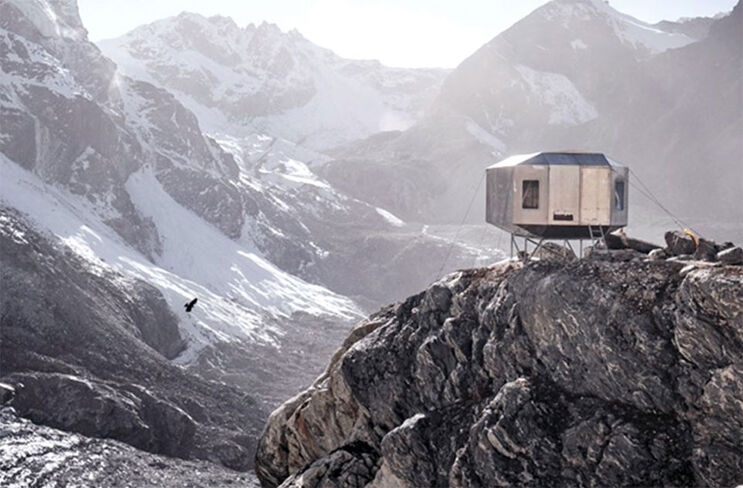
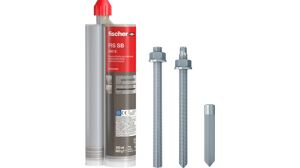
At an altitude of 5080 meters, the first emergency bivouac in the Himalayas was established around 2019. Here, in the Rolwaling region of Nepal, locals and climbers have since found shelter. To secure the emergency accommodation in the middle of the mountains, 24 cartridges of the fischer injection mortar FIS SB High Speed 290 S were used. Together with M20 threaded anchors, this anchors the "legs" of the David Lama bivouac in the rock.
Based on a modular system, Polybiwaks consist of lightweight, prefabricated individual elements. The physically flawless construction is assembled independently of the terrain on a MERO space frame. The assembly of types of different sizes and functions takes place on site in a short time and minimises assembly and flight costs. Polybiwaks have proven themselves for over 50 years as research stations and shelters in the ice deserts of Antarctica, as well as measurement stations and (emergency) bivouacs in the local Alps.

Project Profile

Object type:
Bivouac
What was fastened with fischer products?
Load-bearing columns in the rock
Location:
5080 meters above sea level
Completion:
2019
We are very grateful to fischer for advising us so well and sponsoring the 24 cartridges. After all, the bivouac should still be standing in 50 years.
Ralf Ohnmacht, Co-Initiator of the Biwak Project
In 2018, an expedition team failed due to a variety of organizational issues. The bivouac was temporarily stored at an altitude of 4000 meters to complete the mission a year later with helicopter support. In October 2019, a 15-member team returned to Kathmandu. Due to the large amounts of tools and equipment, the project participants initially chartered a bus there. With this, they traveled for about twelve hours from the Nepalese capital to the Naa Valley, near the Tibetan border. From an altitude of around 1300 meters, the trek then proceeded on foot for about a week to the setup point of the bivouac in the Rolwaling Valley. During this time, the team, which was occasionally accompanied by up to 25 Nepalese porters, had to overcome almost 4000 meters of altitude. To avoid the occurrence of altitude sickness, the stages were deliberately kept small. This allowed them to gradually acclimatize to the altitude. The sleeping altitudes also did not differ by more than 300 to 400 meters per day.

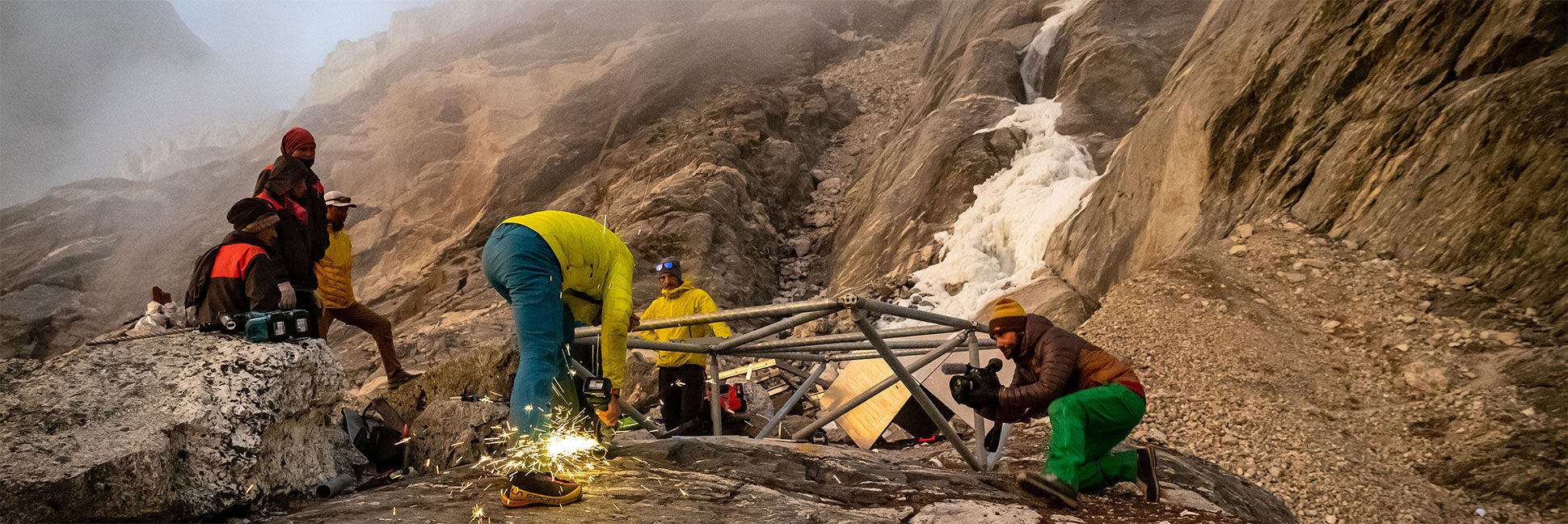
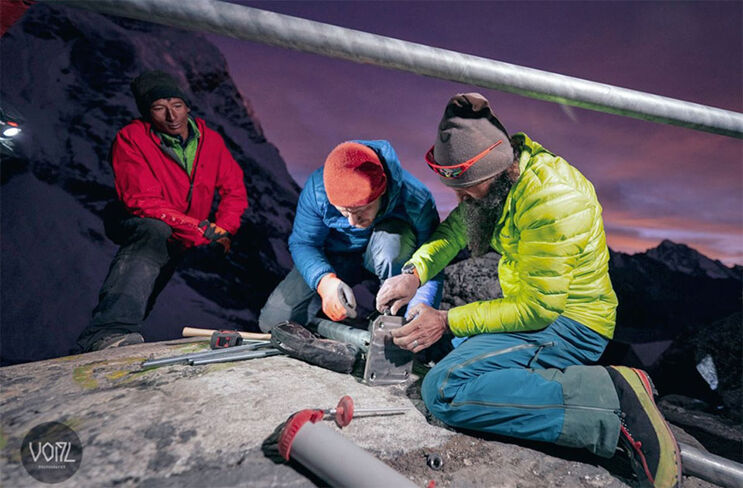
The bivouac was erected within two days on a rock between two glaciers, where it dropped steeply down on the left and right. The bivouac stands on six "legs" with movable base plates, each anchored about 30 cm deep in the rock with four M20 threaded anchors. Two battery-powered rotary hammers and a portable generator for recharging the batteries were used for the drilling. Mesh sleeves were not necessary due to the homogeneous and compact rock.
cd-green-55965cdb4b-w9nvz