Secure hold for a Bavarian landmark

fischer heavy-duty fastening secures Echelsbacher Bridge

Secure hold for a Bavarian landmark
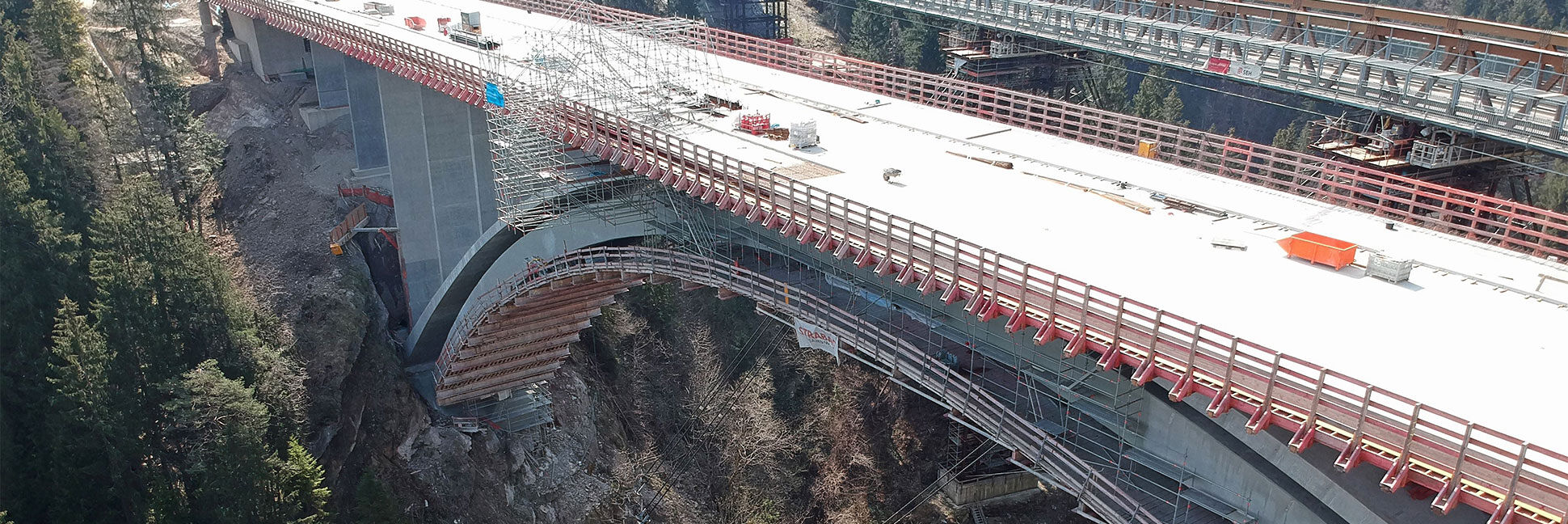
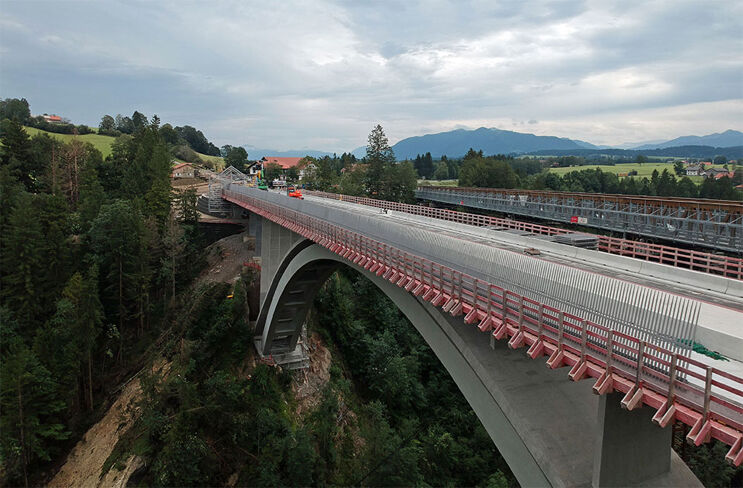
The Echelsbacher Bridge has spanned the deep Ammer Gorge with an arch span of 140 m for more than 90 years, reaching up to 80 m above the valley floor. Its total length is 182 m. It connects the municipalities of Bad Bayersoien and Rottenbuch in the southwest of Upper Bavaria. The federal highway B 23, which extends from Peiting to the German-Austrian border near Griesen, runs over the Echelsbacher Bridge. To preserve and secure the structure for the future, the "Construction project B 23, partial renewal of the Echelsbacher Bridge" was carried out from 2017 to 2021.
The bridge was constructed in 1929 using the Melan-Spangenberg method with the largest bridge arches of their kind worldwide. In this construction method, developed by the Austrian civil engineer Joseph Melan (1853 – 1941) and adapted for large spans by Prof. Heinrich Spangenberg (1879 - 1936), a steel truss arch is built using the cantilever method. An inner and outer formwork is attached to this. This is then concreted in sections. The construction project "B 23, partial renewal of the Echelsbacher Bridge" was preceded by four renovations.
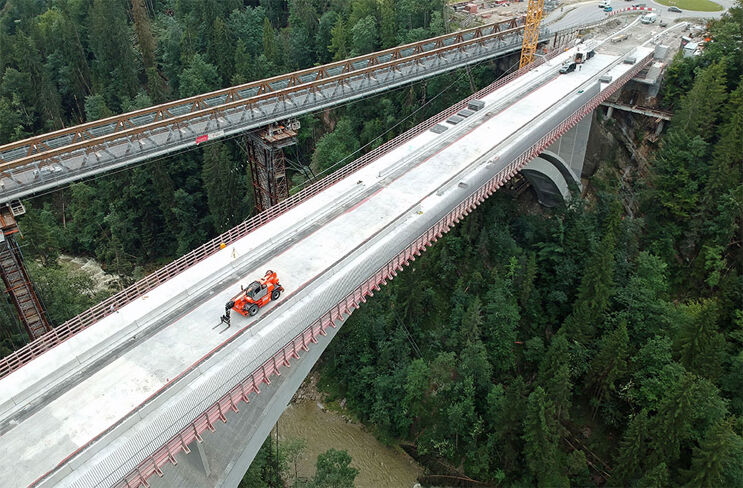
Probably Germany’s largest temporary bridge enabled traffic on the B 23 to continue flowing during the partial renewal carried out from 2019 to 2021. The monument-protected arches at the main structure were preserved, freed from damage, and repaired. The rest of the old bridge was dismantled. Additionally, a new arch with a similar support system was constructed over the existing arches. New railings were installed on the bridge caps.

Project Profile

Year of construction
1929
Completion of partial renewal:
2021
Total length:
182 meters
Object type:
Bridge
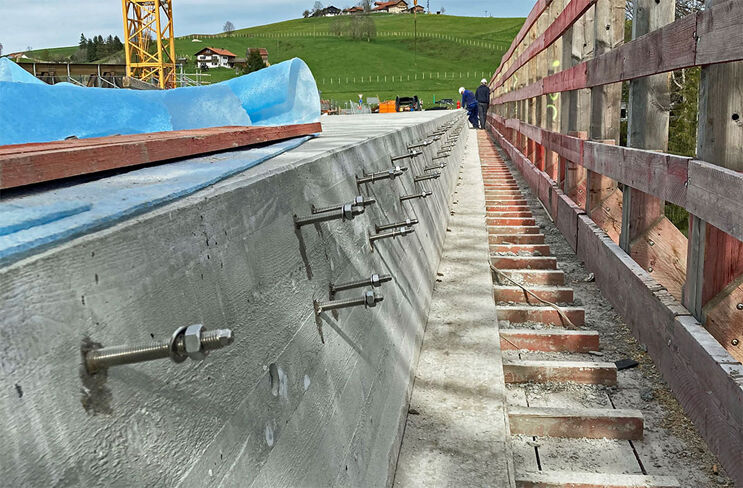
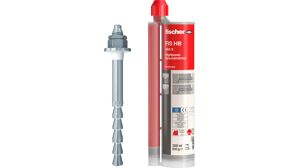
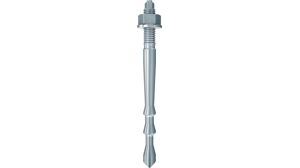
For the secure fastening of the 2.50 m high steel railings in special construction to the concrete of the bridge deck, the structural engineer chose a fastening solution from the fischer group. The fischer injection mortar FIS HB was used together with approximately 2,500 fischer anchor rods FHB II AL M16x160 A4 made of stainless steel. The executing company was Schallschutz Schröder GmbH from Munich. The system allows heavy loads to be securely anchored in concrete. Certainty is provided by the ETA Option 1 for cracked concrete and the Swiss shock approval. The performance strength of the styrene-free vinyl ester mortar combined with the corresponding anchor rod with optimized cone geometry results in high cost-effectiveness: few fastening points and small anchor plates are sufficient to achieve secure hold. The combination of injection mortar FIS HB and anchor rod FHB II is particularly well suited for series installation in outdoor areas.
According to the BMVI (Federal Ministry of Transport and Digital Infrastructure), around 40,000 bridges are currently part of the federal highway network. Many of these need to be renovated. One reason for this is the often advanced age of the structures. In particular, the large valley bridges were mostly built at least 50 years ago. Another cause is the increase in traffic, especially in the area of heavy freight transport. To prevent disasters like the collapse of the Morandi Bridge in Genoa, Italy, regular inspections and, if necessary, renovations are required. Construction measures such as "B 23, partial renewal of the Echelsbacher Bridge" therefore make an important contribution to the safety of people and infrastructure.

cd-green-55965cdb4b-w9nvz