fischer strengthens the glass protective wall of St. Mark's Cathedral

Permanently secure when built on water

fischer strengthens the glass protective wall of St. Mark's Cathedral

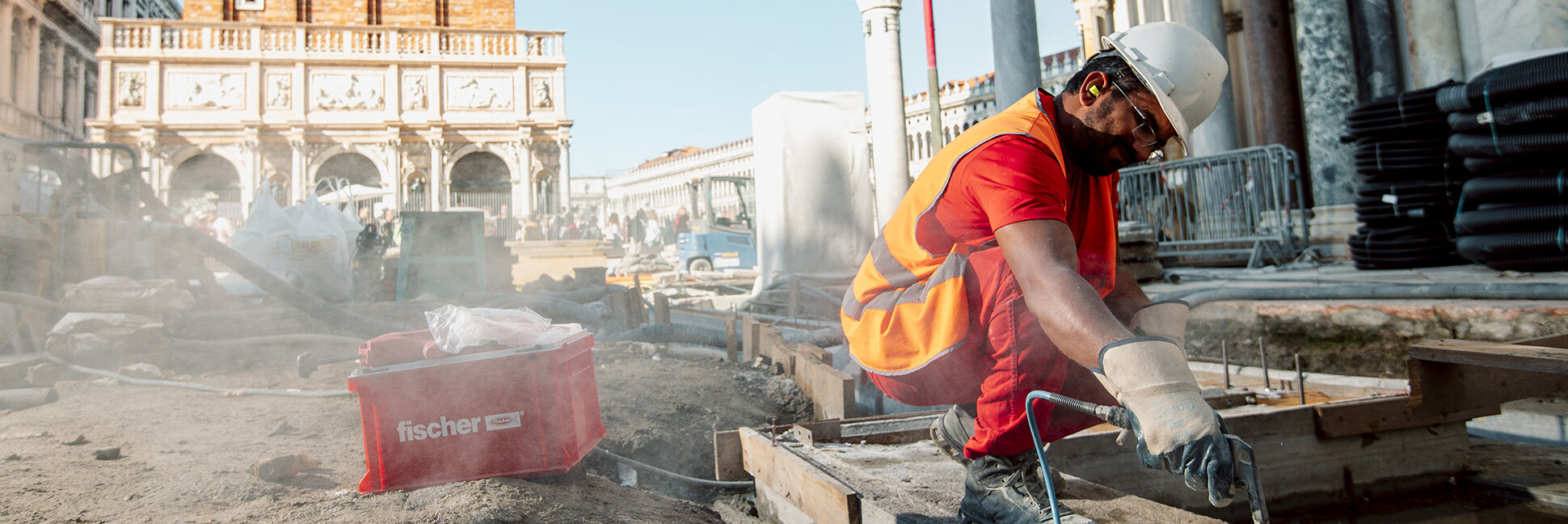
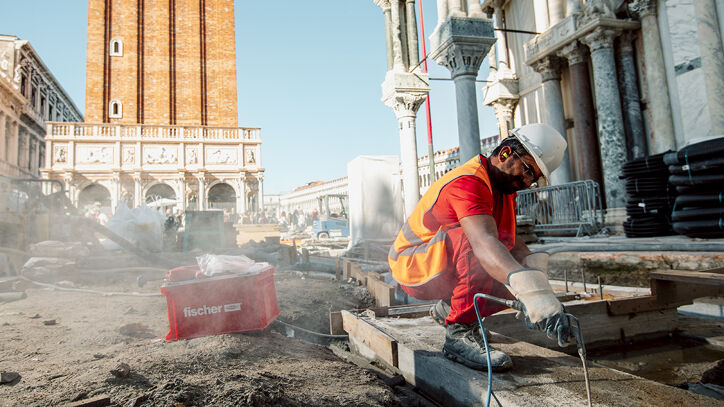
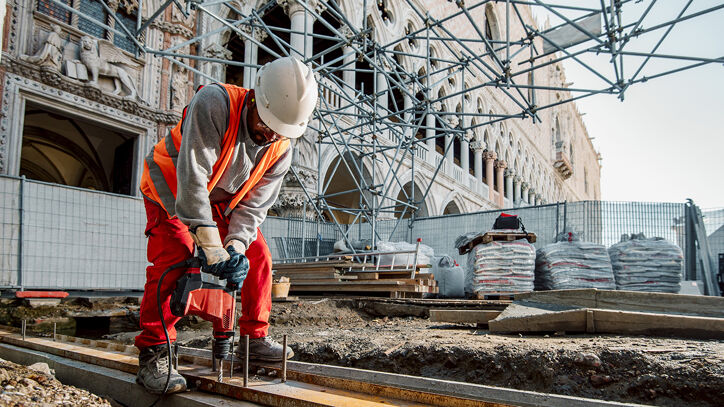
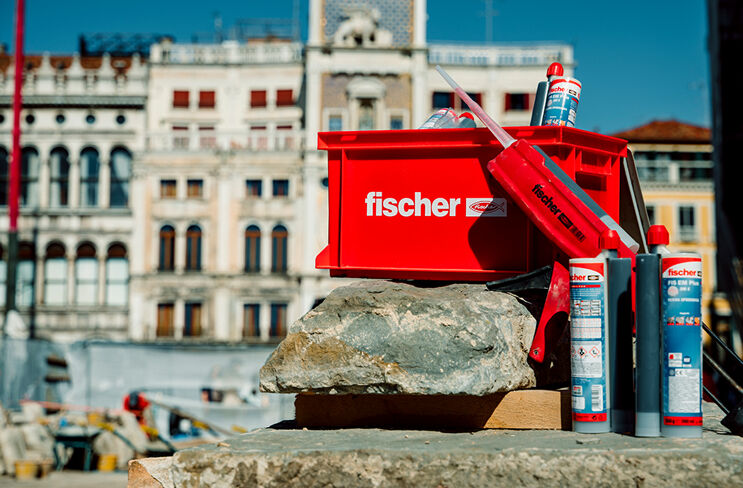
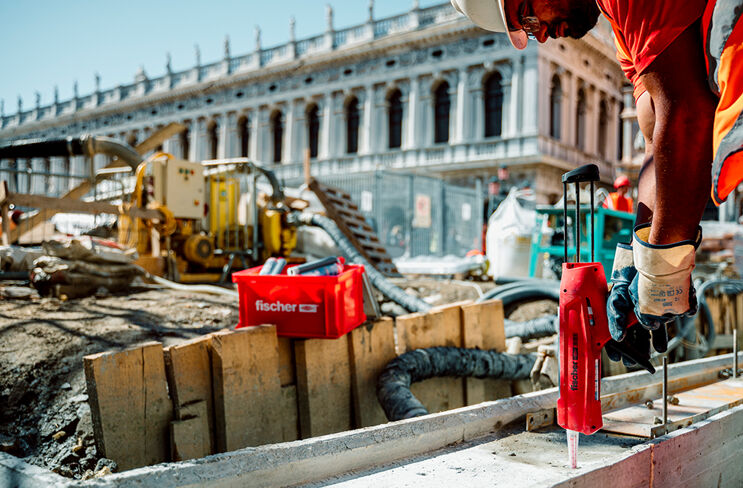
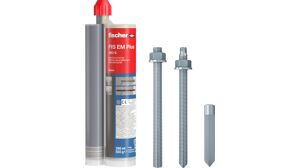
St Mark's Basilica in Venice is an architectural masterpiece and a landmark of the city. In recent years, however, it has repeatedly been threatened by flooding. A system of glass barriers will protect St Mark's Basilica from damage caused by flood waves and inundations in the future. Using the fischer injection mortar FIS EM Plus in combination with fischer FIS A anchor rods, the approximately 1.2 m high glass panels were permanently and securely anchored in the ground.

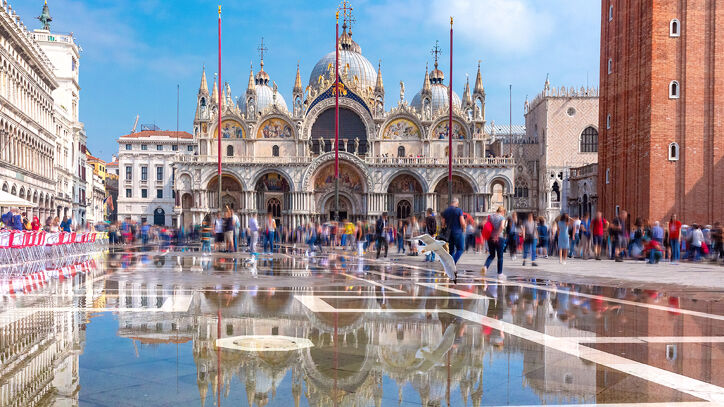
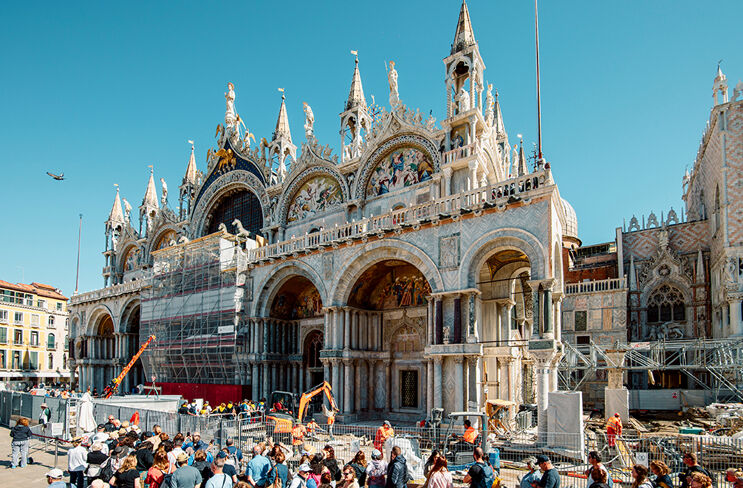
It is one of the main attractions of the city and one of the most spectacular cathedrals in all of Italy: St Mark's Basilica in Venice (Basilica di San Marco). Hundreds of thousands of visitors visit the church at St Mark's Square (Piazza San Marco) every year. For centuries, St Mark's Basilica has been the centre of public and religious life in Venice.
Project Profile Markusdom Venice

Task:
Threat from flooding. A system of glass barriers will protect St. Mark's Cathedral from damage caused by flood waves and inundations in the future.
Year of construction
The church dedicated to the Evangelist Mark was founded in 828, but its current appearance dates from the 11th century.
Protective wall:
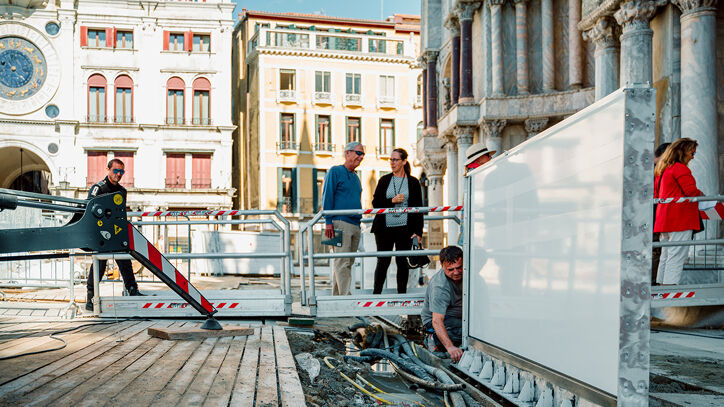
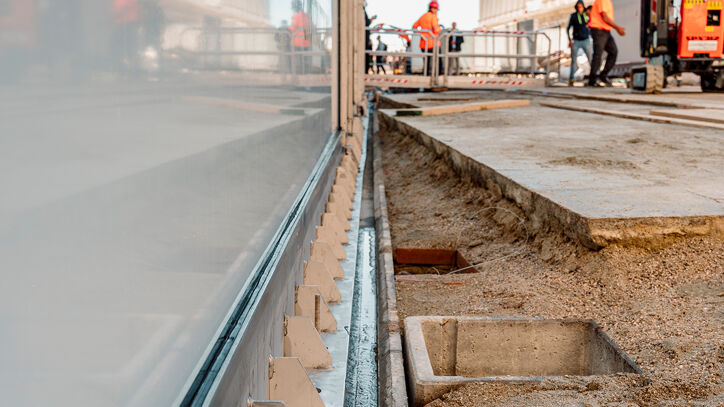
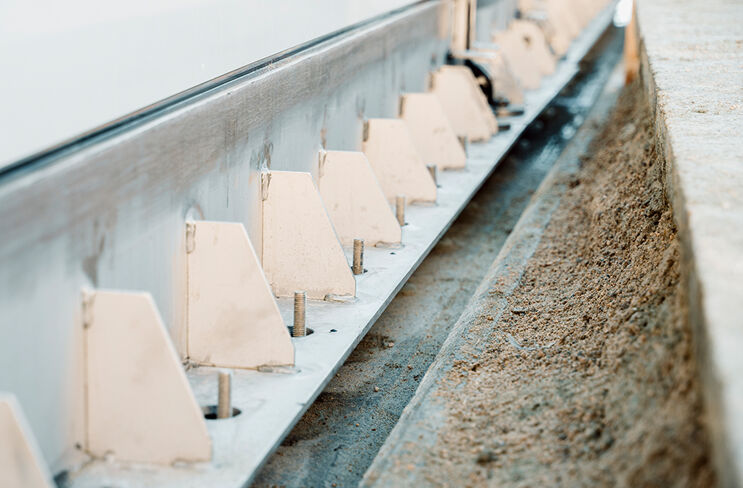
The transparent protective wall of the Markusdom consists of thermally pre-stressed, multilayer glass and is attached to a structure made of stainless steel AISI 316.
Protective barrier:
The 1.20 m high balustrade is intended to protect the basilica from flooding up to a flood level of 2 m above normal. This way, the glass protective wall can keep the historic landmark dry and preserve it for future generations.
The church dedicated to the Evangelist Mark was founded in 828, but its current appearance dates from the 11th century. The Markusdom combines Byzantine architecture with other styles, such as later expansions through Venetian Gothic. It is a testament to the power of the Republic of Venice (Serenissima), the maritime and economic power from the 7th/8th century until 1797. Since 1807, the Markusdom has been the cathedral of the Patriarch of Venice.

From precious marble columns to numerous gold leaf mosaics, which earned the cathedral the name "Golden Basilica," many art treasures can be found here. It houses one of the largest contiguous mosaic surfaces in the world, covering 8,000 m². However, the Markusdom is repeatedly threatened by flooding. Visually discreet glass barriers are intended to preserve the historic landmark for future generations.

On the night of November 13, 2019, the water level in Venice rose to 1.87 m above sea level. This is the highest recorded value since the devastating flood in 1966 with a level of 1.94 m. The saltwater penetrated the crypt of the cathedral, causing structural problems and damaging floor mosaics and masonry. The effects of efflorescence are particularly severe, for example on bricks, limestone, and marble in St. Mark's Basilica.

In this process, the salts, as components of the building materials, are dissolved by moisture and penetrate out of the structure. They remain on the surface of the building component as an unsightly deposit when the water evaporates. During evaporation and drying, the salts crystallize and expand in volume. The limestone and marble typical of Venetian architecture are especially affected by the impact of saltwater. Sub-efflorescence forms in the cavities and cracks of the stone, leading to flaking, cracking, and spalling.
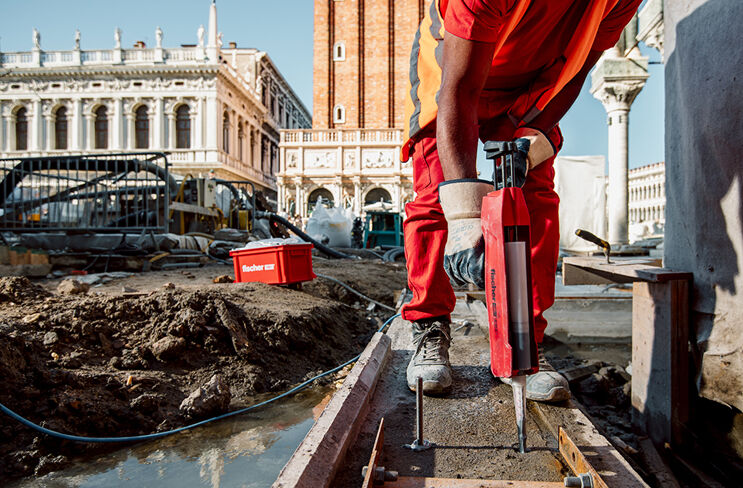
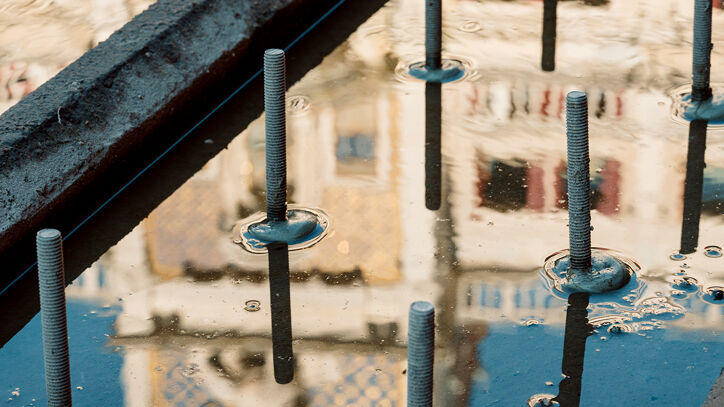
The transparent protective wall of St. Mark's Basilica consists of thermally pre-stressed, multi-layered glass and is attached to a structure made of stainless steel AISI 316. Approximately 150 linear meters of glass panels at right angles surround the basilica completely. The glass of the panels was chosen to be extra clear in order not to alter the colour of the white marble on the facade of St. Mark's Basilica. This ensures that the view from St. Mark's Square to the cathedral remains unobstructed despite the barrier. To secure the stainless steel rails in the concrete foundation, fischer injection mortar FIS EM Plus was used together with FIS A anchor rods.
The chemical anchoring system guarantees permanently secure fixings in concrete as well as subsequent reinforcement connections according to European Technical Assessments (ETAs) and ICC approval for the USA and Far Eastern countries. Its service life in the ETA is 100 years and, according to the Stuttgart engineering office IEA, 120 years. The injection mortar is approved for seismic applications of performance categories C1 and C2 (ETA) and A to F according to ICC-ESR. It is also the safe choice in water-filled drill holes and in the event of breakout fire (fire resistance R240). Its ICC approval also includes underwater installation.

The 1.20 m high balustrade is intended to protect the basilica from now on against flooding up to a flood level of 2 m above normal. In this way, the protective wall made of glass can keep the historic landmark dry and preserve it for future generations. 
cd-green-55965cdb4b-8kbsh